

Views and Analysis
Type:
Author:
Sort:

Oct 22, 2026
Confidence Revisited: The Distribution of Information
Jun 4, 2026
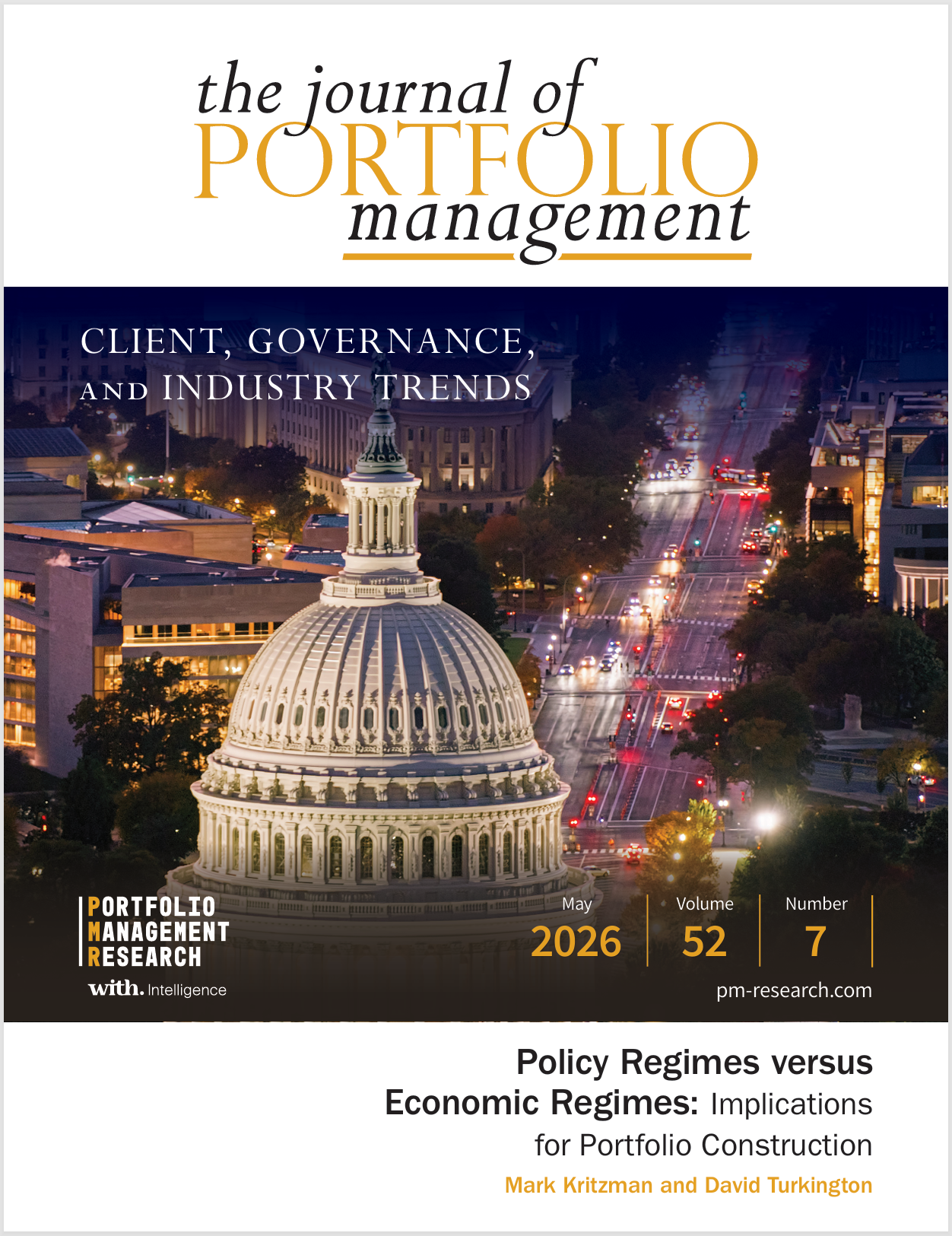
Policy Regimes versus Economic Regimes
Apr 15, 2026
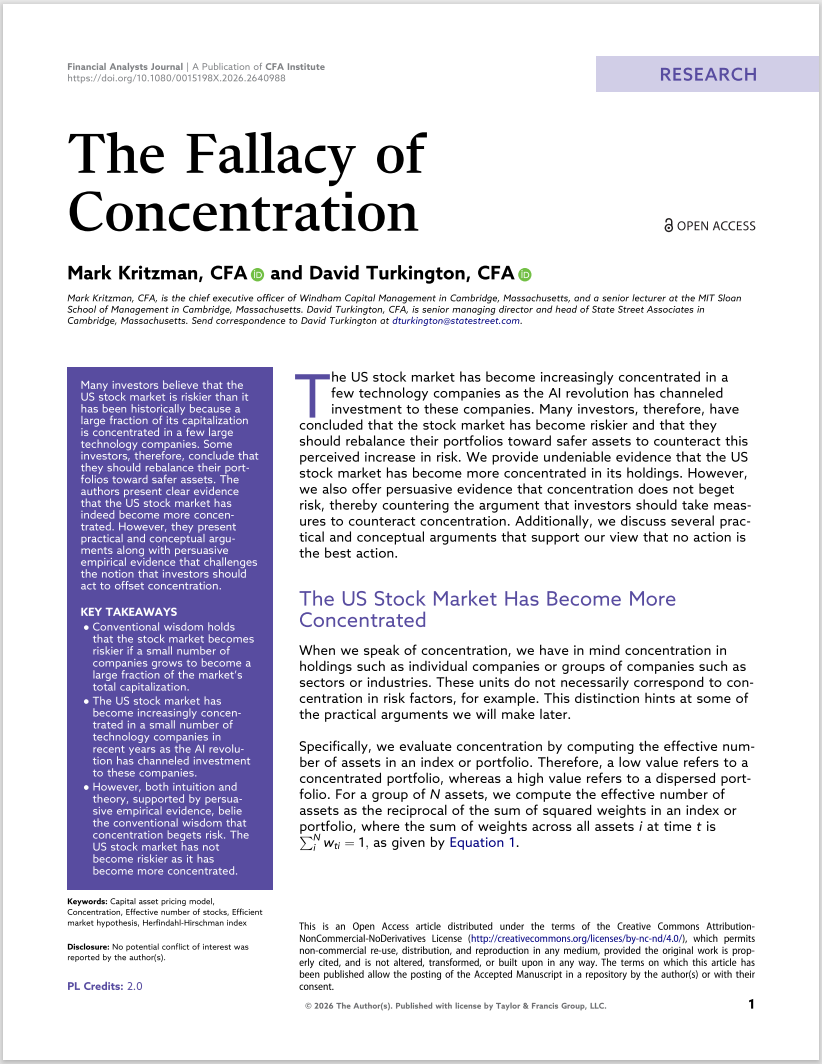
The Fallacy of Concentration
Sep 10, 2026
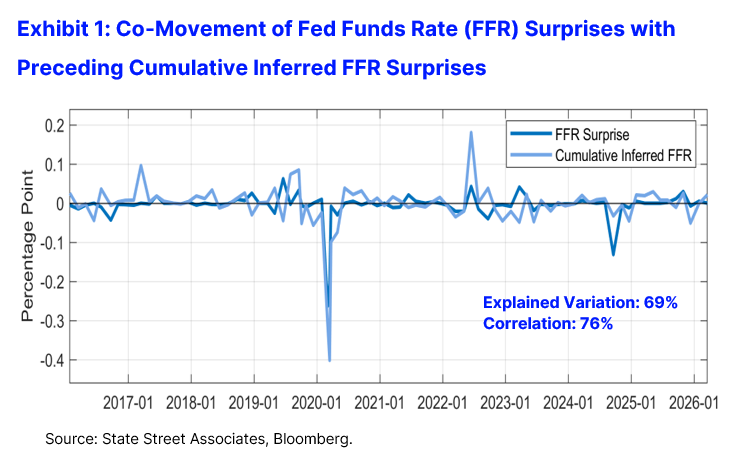
Predictive Power of Inferred Fed Surprises
Federal Reserve (Fed) policy expectations are a major driver of financial markets, yet traditional measures of Fed surprises are only available around FOMC announcements. This paper develops “inferred Fed surprises”, a real-time framework that extracts changes in expected Fed policy from daily movements in interest rate markets, allowing investors to monitor how monetary policy expectations evolve between official policy decisions. We show that these inferred surprises contain valuable information ...
Aug 4, 2026
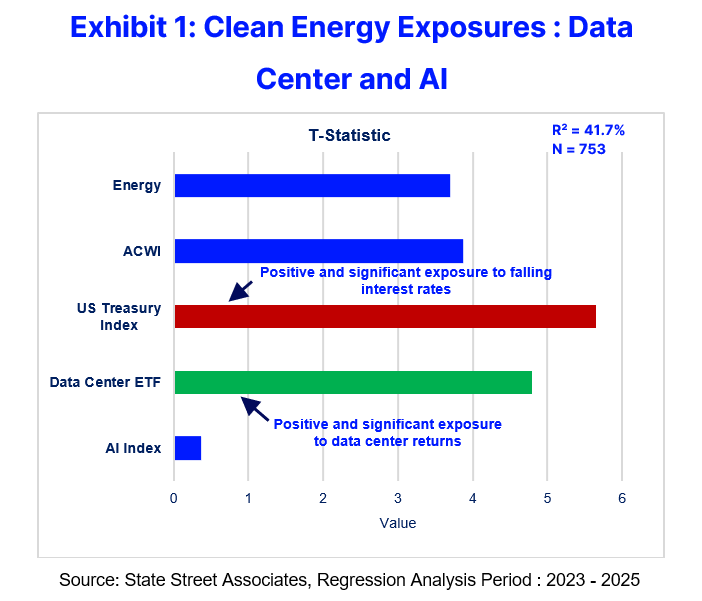
The AI-Energy Nexus
The rapid buildout of artificial intelligence infrastructure is reshaping energy markets through a direct physical channel: data center electricity demand. In this paper, we show that clean energy equities are significantly more sensitive to data center infrastructure returns than traditional energy equities, reflecting their exposure to long-duration investment and grid expansion dynamics. While AI technology indices appear to explain energy returns in simple specifications, their explanatory power ...
Apr 24, 2026
How do Global Portfolio Investors Hedge Currency Risk?
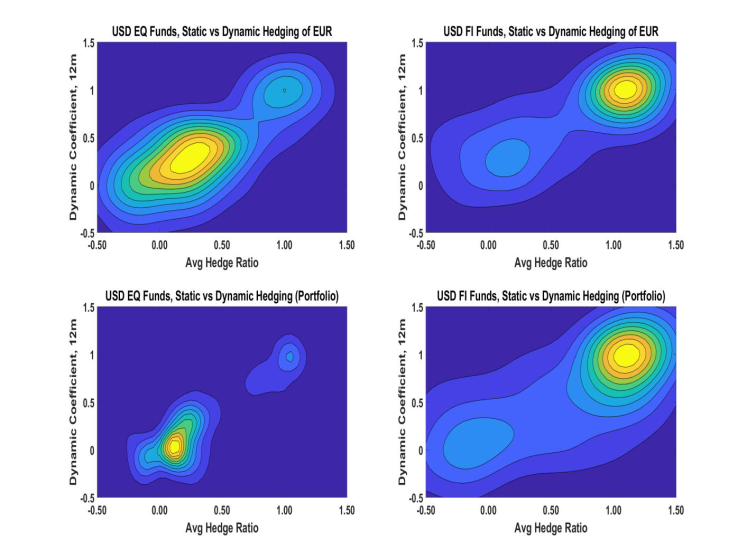
We study how institutional investors hedge foreign exchange risk using more than 25 years of monthly portfolio data from a global custodian, matching asset holdings with FX forward positions for U.S.- and non-U.S.-based investors. Fixed-income investors hedge more than equity investors, non-USD investors hedge more than USD investors, and hedging has risen markedly since 2008. Many investors appear to target and rebalance toward stable hedge ratios. Hedge ratios are related to carry, volatility, ...

Oct 12, 2026
Redefining the Investment Edge in the Age of AI
Artificial intelligence (AI) is transforming the way investment managers work, but gaining a durable edge still depends on differentiated information, thoughtful analysis, and trusted expertise. We view AI as the connective layer that helps investors bring together differentiated data, research, and analytical capabilities to make more informed decisions, faster. Instant Query (iQ), our AI-powered system within our Insights research platform, enables clients to seamlessly explore, access, and curate ...
Oct 2, 2026
How attractive are 6% yields?
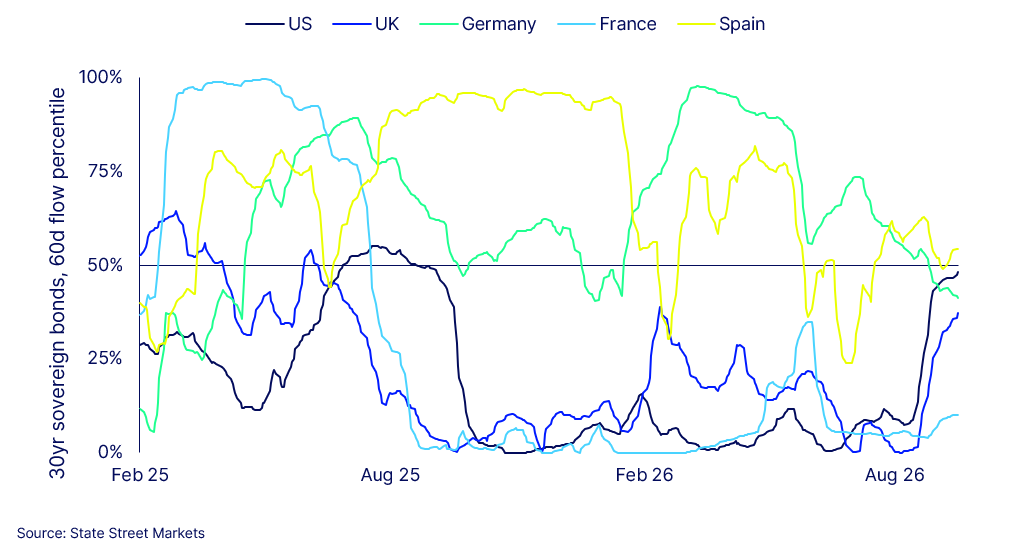
Our investor behavior data has shown weak asset manager demand for longer-dated sovereign bonds across several countries for more than a year. Higher short-term rates, inflation and deficits have been significant headwinds, but tentative signs suggest yields are reaching attractive levels. Flows into 30-year Treasuries and Gilts have recovered close to their median levels as yields have jumped toward and through 6%. The recovery in Gilt flows is especially impressive ahead of the budget. Demand ...
Sep 4, 2026
How troubling is the return of US inflation?
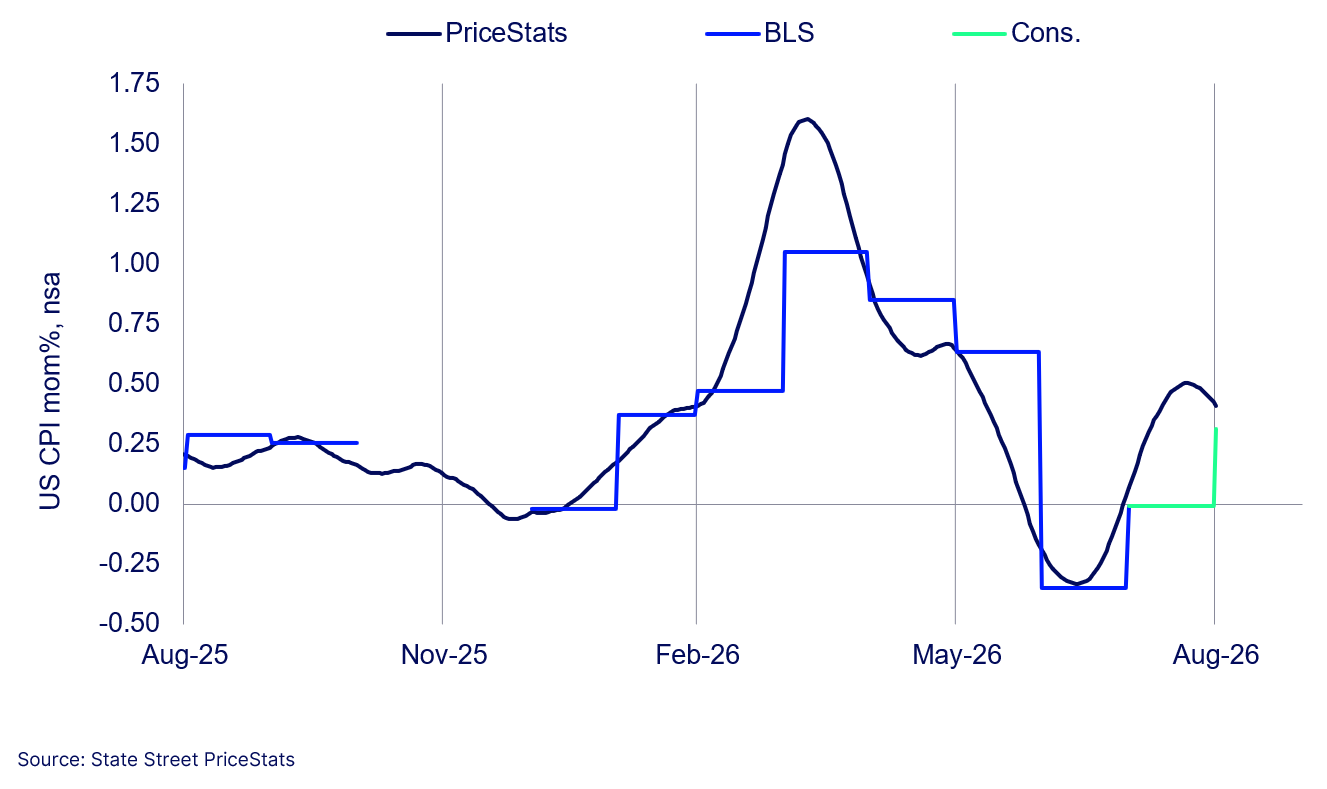
The State Street PriceStats index rose 0.44%mom (nsa) in August on a non-seasonally adjusted basis, its largest monthly increase since May after two months of flat or falling prices. This is potentially problematic coming at such a delicate time ahead of the September FOMC. But as troubling as the headline jump looks, the detail behind it suggests almost half of the leap is energy related. It is also a move that consensus estimates appear well prepared for, and may, in the words of Gov. Waller, ...


Oct 2026
Yen, Rates and Capital Flows: The View from Tokyo
Japanese life insurers manage one of the largest pools of foreign savings in the world, and their decisions about where to put it and whether to hedge it ripple through global bond markets and the yen. With domestic rates normalising, the story of persistent yen weakness may be starting to change. In this episode, we sit down with Shintaro Yoshida, CIO of Orix Life Insurance, to discuss how rising JGB yields are reshaping the domestic-versus-foreign allocation decision, whether repatriation is a ...
Oct 2026
The AI Quotient: Using Machines To Make Better Decisions
Nearly four years after the release of the first widely available large language models, the investing implications of artificial intelligence have so far been clear: it has been a very good idea to be long the AI factor. But we are no closer to understanding just how powerful artificial intelligence is and might be across the wider range of human experience. This week, we kick off a series of occasional episodes that will hopefully get us closer to some of the answers to those big picture questions. ...
Oct 2026
Bytes, Bonds and the Yen: The Big Picture In FX
It's easy to get side-tracked by the day-to-day minutiae of markets, and taking a step back to get the bigger picture is often a good idea. Chris Pizzotti, Global Head of FX Sales and Trading at State Street Markets, is an ideal person to have just such a conversation. This week, we get Chris’ thoughts on the big trends in currency markets in 2026 and how he thinks they’ll play out in the coming months. More importantly, we talk through the future of the FX business and the value proposition for ...


Feb 2026
A step on the brakes
Holdings Institutional portfolios stayed strongly tilted towards equities, with stock allocations at their highest since 2007 and bond allocations at their lowest since 2008, while the US remained a clear regional overweight. Risk Appetite Risk appetite eased back to neutral after a mid month lift, as Fed uncertainty and liquidity concerns encouraged a more cautious mix, with selective risk still expressed in emerging market bonds and FX and high yield versus investment grade.
Dec 2025
Investors neutral amidst data uncertainty
Holdings Institutional portfolios remain heavily overweight in US equities and technology, favouring quality, growth and large caps, with stock allocations at an eighteen‑year high and bonds and cash still out of favour. Risk Appetite Risk appetite has eased to neutral as investors rotate out of cyclicals and commodities into defensives and the US dollar, while still taking selective risk in high yield credit and technology rather than retreating from equities.
Nov 2025
One Step Forward, One Step Back
Holdings Institutional portfolios remain heavily overweight in US, Tech, and growth oriented styles, with stock allocations at an 18-year high. Risk Appetite The risk appetite index has dropped to neutral as investors rotate out of cyclicals and commodities into defensives and the US dollar.

1. Peter L. Bernstein Award for Best Article in an Institutional Investor Journal in 2013; Bernstein-Fabozzi/Jacobs-Levy Award for Outstanding Article in the Journal of Portfolio Management in 2006, 2009, 2011, 2013 (2), 2014, 2015, 2016, 2021; Graham & Dodd Scroll Award for article in the Financial Analysts Journal in 2002 and 2010. Roger F. Murray First Prize for Research Presented at the Q Group Conference in 2012, 2021, 2023. Harry M. Markowitz Award for Best Paper in the Journal of Investment Management in 2022, 2023. Doriot Award for Best Private Equity Research Paper in 2022.