Logo
Insights Logo
Journal Articles
Complimentary CONTENT

Decarbonizing Everything

July 21, 2021
By: Alex Cheema-Fox, Bridget Realmuto LaPerla, David Turkington, George Serafeim, Stacie Wang, State Street Associates
Summary

By Alex Cheema-Fox, Bridget R. LaPerla, George Serafeim, David Turkington, and Hui (Stacie) Wang.


Published in the Financial Analysts Journal, May 2021


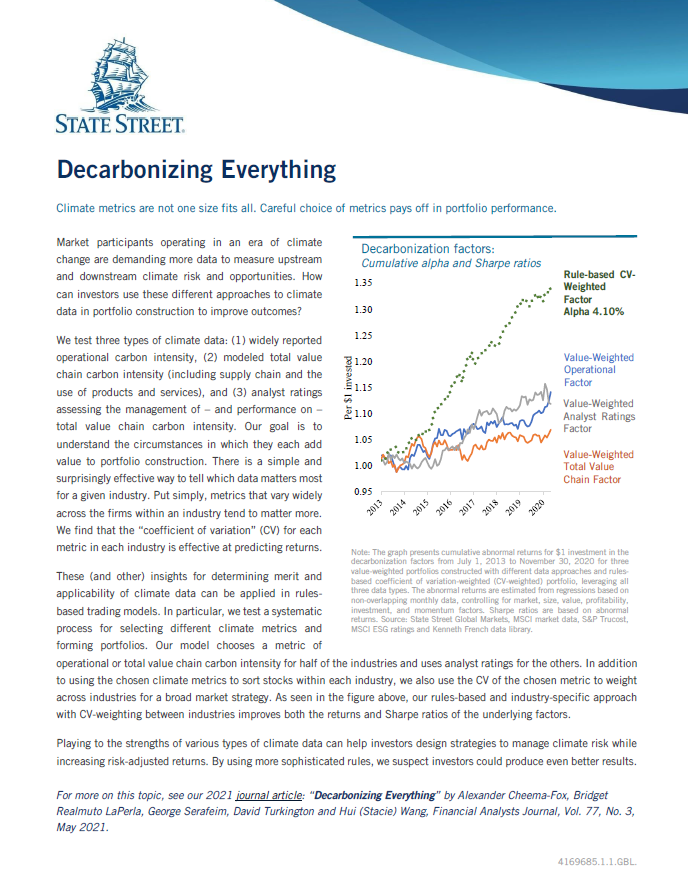
In the era of climate change, investment managers are grappling with how to make sense of different approaches to climate data to improve portfolio outcomes.


In our research with Professor George Serafeim at Harvard Business School, we start by testing the circumstances in which three types of qualitative and quantitative measures of carbon risk, including upstream and downstream characteristics, add value to portfolio construction. We discovered a clear way to identify which data matters the most for a given industry. The metrics that vary widely across firms in an industry are effective at predicting returns. This dispersion is calculated through the “coefficient of variation” for each metric in each industry. These (and other) insights for determining the merit and applicability of climate data can then be applied in rules-based trading models.


Our rule is a systematic process of choosing a different type of climate metric across industries. Playing to the strengths of various types of climate data can help investors design strategies to manage climate risk while increasing risk-adjusted returns. By using more sophisticated rules, we suspect investors could produce even better results.




READ THE 1-PAGE SUMMARY

Author Bios
Alex Cheema-Fox
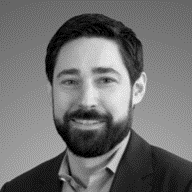
Alex Cheema-Fox is Managing Director and Head of Investor Behavior and Sustainability Research at State Street Associates
Bridget Realmuto LaPerla
David Turkington
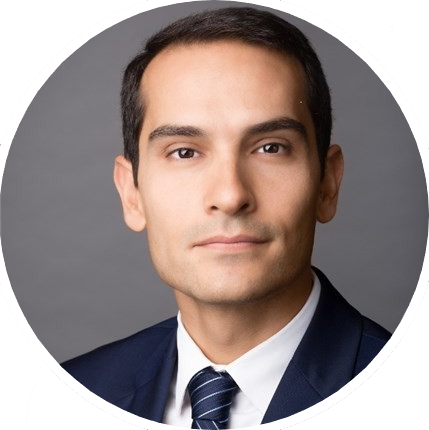
David Turkington is Senior Managing Director and Head of State Street Associates, State Street Markets’ decades-long partnership with renowned academics that produces innovative research on markets and investment strategy. David is a frequent presenter at industry conferences, has published more than 40 research articles in a range of journals, and serves on the editorial board of the Journal of Alternative Investments. He is the co-author of three books including “Asset Allocation: From Theory to Practice and Beyond” and “Prediction Revisited: The Importance of Observation.” His published research has received the 2010 Graham and Dodd Scroll Award, five Bernstein-Fabozzi/Jacobs-Levy Outstanding Article Awards, the 2013 Peter L. Bernstein Award for best paper in an Institutional Investor journal, the 2021 and 2023 Roger F. Murray First Prize for outstanding research presented at the Q Group seminars, and the 2022 and 2023 Harry Markowitz awards for best paper in the Journal of Investment Management.
George Serafeim
George is a professor at Harvard Business School whose research combines accounting, finance, management, and strategy. His influential work has documented the energy transition and its cross-market effects, and his book “Purpose and Profit: How Business Can Lift Up the World” explores the challenges and opportunities of driving impact with purpose-driven organizations. George’s in-depth assessments of corporate dynamics give State Street clients new evidence on how capital allocation aligns with long-term stakeholder goals.
Stacie Wang
State Street Associates
State Street Logo
1. Peter L. Bernstein Award for Best Article in an Institutional Investor Journal in 2013; Bernstein-Fabozzi/Jacobs-Levy Award for Outstanding Article in the Journal of Portfolio Management in 2006, 2009, 2011, 2013 (2), 2014, 2015, 2016, 2021; Graham & Dodd Scroll Award for article in the Financial Analysts Journal in 2002 and 2010. Roger F. Murray First Prize for Research Presented at the Q Group Conference in 2012, 2021, 2023. Harry M. Markowitz Award for Best Paper in the Journal of Investment Management in 2022, 2023. Doriot Award for Best Private Equity Research Paper in 2022.